
Environmental pollution from antibiotics in water and toxic gases like ammonia (NH₃) threatens public health and ecosystems in Bangladesh. Traditional detection methods are expensive and impractical for widespread use.
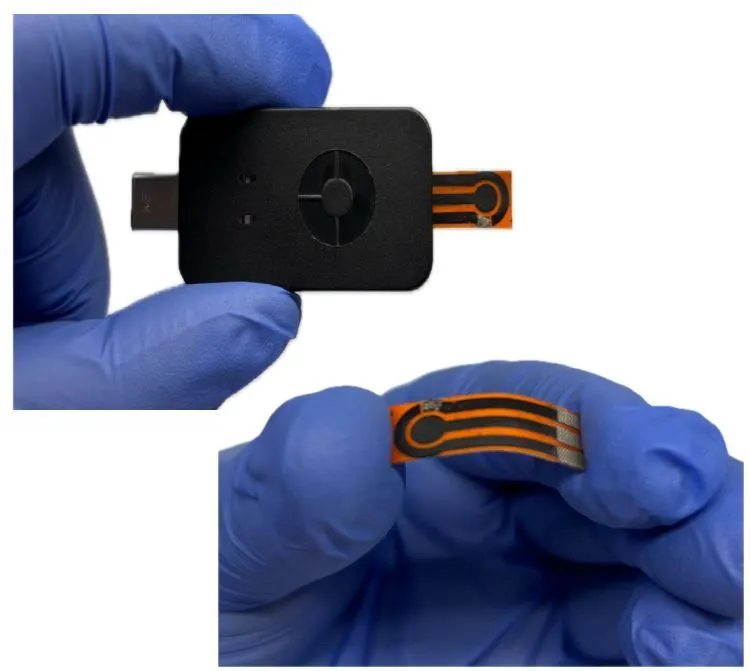
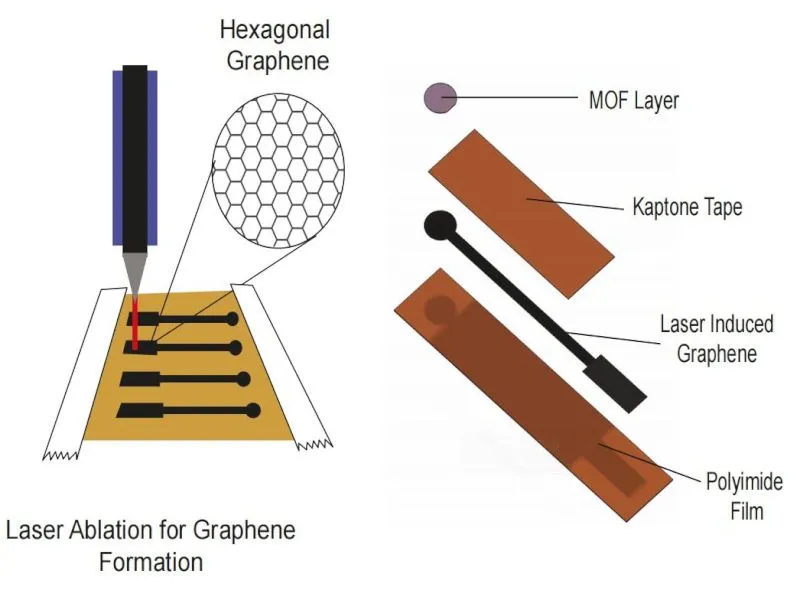
We introduce a low-cost, DIY fabrication of laser-induced graphene (LIG) electrodes using a visible-range (455 nm) pulsed laser on commercial polyimide films.
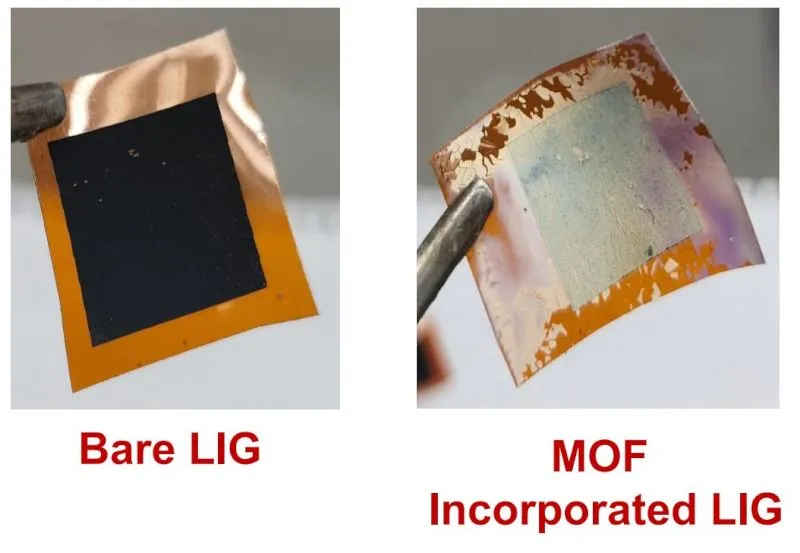
This accessible method enables flexible, programmable sensor production without costly CO₂ lasers. Surface modification of LIG with metal-organic frameworks (MOFs) creates versatile sensors for different applications.
A MIL-100@LIG electrode selectively detects the antibiotic ciprofloxacin at nanomolar levels, while a 2D semiconducting MOF-LIG hybrid enhances NH₃ gas sensing at ppm concentrations.
These sensors combine high sensitivity, selectivity, and flexibility, suitable for real-time environmental monitoring.
Our technology offers an affordable, scalable solution to monitor critical pollutants in Bangladesh, supporting sustainable environmental management and improving public health.
This innovation can empower local communities and industries with accessible tools for pollution control, contributing to socio-economic and technological advancement in the region.